



Uganda’s Parliament was never meant to be a private estate. It was designed to be the people’s house , a sacred institution where the voices, taxes, struggles and hopes of ordinary Ugandans converge into law, accountability and national direction.
That is why the choice facing the 12th Parliament is bigger than personalities, factions or political survival. It is a choice between stewardship and ownership.
A steward understands that leadership is borrowed. An owner behaves as if power belongs to them permanently.
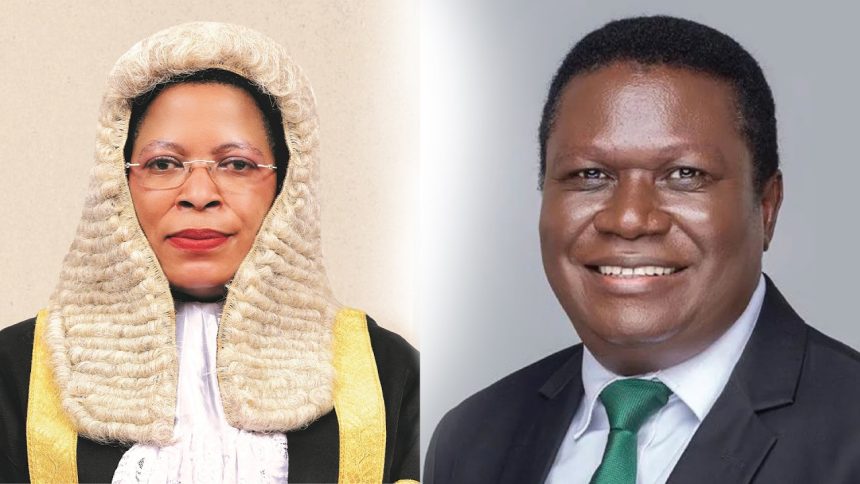
That distinction defines the growing public frustration with the current leadership of Parliament under Rt Hon .Anita Among. For many Ugandans, Parliament has increasingly ceased to resemble a people’s institution and instead become a symbol of excess, luxurious expenditure using tax payers funds and entitlement.
At a time when hospitals lack medicine, youth unemployment is exploding, schools are underfunded and citizens are crushed by taxes, reports of lavish spending, luxury lifestyles and misuse of parliamentary resources have created a dangerous moral disconnect between leaders and the people they claim to represent.
The anger is not simply about money. It is about attitude. When leaders begin to treat public institutions as personal kingdoms, accountability dies quietly. Parliament stops asking hard questions.
Oversight becomes selective. Loyalty replaces principle. Critics become enemies. Public funds become rewards for political obedience.
The institution slowly transforms from the guardian of democracy into the protector of privilege.
A steward does the opposite. He understands that Parliament does not belong to the Speaker. It belongs to the market vendor in Owino, the teacher in Kabale, the farmer in Soroti and the boda boda rider in Gulu.
A steward protects the dignity of the institution because they know future generations will inherit it. They lead with restraint because public office is not an opportunity for self-glorification but a responsibility to serve.
That is why the message behind the #SaveParliament and #ParliamentExhibition movement resonates far beyond politics. It taps into a growing national feeling that Uganda’s institutions are drifting away from the citizens they were built to serve.
Many Ugandans now see Parliament not as their defender, but as an expensive club detached from ordinary suffering. The next Speaker has an opportunity to reverse that perception.
A steward Speaker would restore Parliament’s moral authority by embracing transparency instead of secrecy. They would reduce extravagance instead of defending it.
They would encourage debate instead of silencing dissent. Most importantly, they would understand that respect for Parliament is earned through integrity, not enforced through power.
This is not about whether one supports opposition or ruling party politics. Even governments function better when institutions remain credible.
A Parliament viewed as compromised weakens the entire country because citizens lose trust in laws, budgets and national leadership itself.
Democracies rarely collapse overnight, they decay gradually when institutions become personalised.
Uganda cannot afford that decay.The office of Speaker should never project the image of untouchability. It should project humility, discipline and national duty. The Speaker is not the owner of Parliament’s microphone, budget or conscience. They are merely its temporary custodian.
History ultimately judges leaders not by how powerful they appeared, but by whether institutions became stronger or weaker under their watch.
That is the real choice before the 12th Parliament.Uganda needs a Speaker who walks into Parliament remembering that every chair, every vehicle, every allowance and every privilege is funded by citizens who often survive on less than a meal a day.
The country needs leadership that inspires trust instead of resentment. Leadership that sees public office as service not status.
A steward builds institutions while an owner consumes them.
And perhaps that is why figures like Norbert Mao are increasingly being viewed by some Ugandans not merely as political contenders but as possible answers to a Parliament many believe has lost its moral compass. Whether one agrees with his politics or not, the growing call is clear. Uganda’s Parliament does not need another ruler.It needs a steward.